
Toru Takemitsu Composition Award
4 Finalists selected for Toru Takemitsu Composition Award 2026
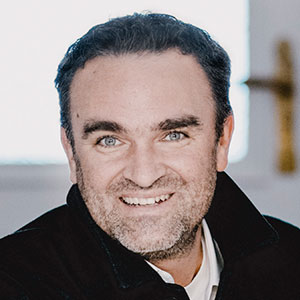
[Judge: Jörg Widmann]
05 Dec, 2025
Jörg Widmann, judge of the Toru Takemitsu Composition Award 2026, has chosen the following 4 orchestral works out of 112 entries from 25 countries (Countries & Regions) eligibly accepted by 30 September 2025. Screening was done with the anonymous scores having only their titles.
These 4 nominated works will be performed on 12 July 2026 at the Tokyo Opera City Concert Hall : Takemitsu Memorial for Mr. Widmann’s final judgement. Here is the list of finalists in order of their entry.
Applications for 2026(PDF/148KB)
- Year 2026 Jörg Widmann (Germany)
-
©Marco Borggreve
Finalists (in order of entry)
Ziyi Tao (USA)
If for orchestra
Born in Beijing, China in 2002 to two Jazz musicians. He began playing the piano at age seven and moved to New York City in 2015. He began playing the organ in 2016 and studied composition at Special Music School with Max Grafe from 2017-2021. He studied at The Juilliard School with Robert Beaser in 2021, Andrew Norman from 2022-2024, and Nina C. Young from 2024-2025, as well as electronic music with Nathan Prillaman and Edward Bilous. He studied conducting with Tanatchaya Chanphanitpornkit, Michael Repper, and Jeffrey Milarsky. He is guided in his philosophy studies by Aaron Jaffe and Noah Gordon. Additionally, He recognizes Reiko Füting, Marco Momi, George Lewis, and Chaya Czernowin as four important mentors who have greatly shaped his musical thinking. In his works, he investigates the simultaneity of conceptual thinking and immediate sensation. He is currently pursuing his Masters studies at the Musikhochschule Frankfurt am Main.
https://www.ziyi-tao.com/
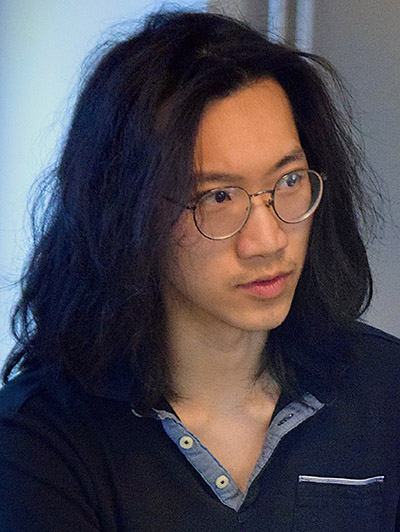
Kenshi Matsuo (Japan)
Variations for Orchestra
Born in Fukuoka, Japan in 1994. After enrolling in Faculty of Pharmaceutical Sciences, Kyoto University in 2013, he began self-studying composition. He graduated from the university and obtained a pharmacist license in 2019. He currently works for a pharmaceutical company in Osaka.
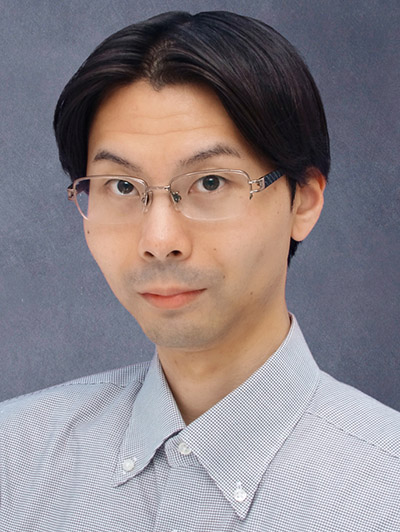
Zhehe Cui (China)
The Last Gamble for orchestra
Born in Yanji, China in 1997. He obtained a Bachelor's degree in 2020 from the Shenyang Conservatory of Music, where he studied under Professor Jixue Wu. He then undertook private composition studies with Xin Xie, a composer who had studied in Germany.
As a young composer from China's Korean ethnic group, he combines cross-cultural and ethnic vocabulary with contemporary sound materials to create his own unique sonic language. His work explores the potential of sound to construct visually striking scenes. Often using breath-like pulsations and asymmetrical rhythms as a framework, his work generate tension through extreme contrasts between the restrained subtlety of Eastern aesthetics and explosive outbursts. Moreover, he is also a well-established hip-hop artist who draws inspiration from popular artistic concepts and cross-genre elements, incorporating them into his experimental compositions.
https://zhehecui.com/

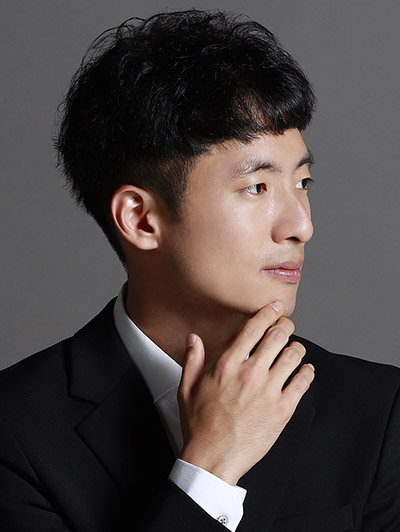
Jaehyeok Choi (Korea)
Supernova for orchestra
Born in Cheonan, South Korea in 1998. He is a composer whose music explores the inner dimensions of human existence and social conflict. He studied composition under Professor Jaemoon Lee at Chung-Ang University, where he earned his Bachelor of Music degree. His works reconstruct the wounds and memories of our time through refined structures and delicate soundscapes, reflecting on fundamental questions of being. His music has been performed by Ensemble Wiro, the Seogwipo Wind Orchestra, and the Busan City Choir. Choi addresses themes such as war, isolation, and solidarity across diverse instrumentations. His notable works include New Cold War, Irreconcilable, and Arirang.
Comments for the Final / as a single judge
for the Toru Takemitsu Composition Award 2026
Creativity — A Wonder
To be able to be creative, to be permitted to compose, is a gift — and a blessing. And yet composing is, in the most beautiful and literal sense, also hand-craft. What is it, then, that we as composers actually do? We place dots, strokes and lines on paper, hoping to convey to the performers — and ultimately to the audience — what we wish to express. It remains a magical process: to have these musical signs, scattered across many pages, brought to life by singers and instrumentalists, made to sound. We composers strive to formulate our musical symbols as clearly and precisely as possible, so that the musicians understand them and — in a second process of translation — communicate them to the audience, to the listeners. That is the technical, but not only technical, aspect of our creative work. There must be something within us that has to come out! A sonic or formal vision, the absolute determination to articulate our musical ideas in just this way, and not in any other.
And that, the taking of decisions concerning sound, instrumentation and form, is something profoundly personal, individual. I have the deepest respect for anyone who expresses themselves artistically — be it as a painter, poet, composer or as an actor or musician who steps onto the stage and, as it were, externalises themselves, sharing their innermost feelings and thoughts with others. And so it was for me when reading and studying the submitted scores for the Toru Takemitsu Composition Award: a sense of respect for every one of these artistic voices. One wishes to do justice to each score — and therefore to each person behind it — however delightfully different the musical languages and aesthetics may be. And yet, at the end of the day, after much weighing up, one must take a decision. And that hurts. For — with few exceptions — the standard of the submitted scores was remarkably high in one respect: in the knowledge and command of today’s sonic possibilities and playing techniques. In other words: most can write for orchestra with extraordinary expertise. A great number of the scores operate with complex, finely differentiated textures. Admirable as this is, it also has a paradoxical aspect: behind all these virtuously crafted textures, it often becomes difficult to discern an individual, a personal voice, the human being behind the piece. To put it differently: the great Ligeti once asked himself, when reading a Mozart Mass: Is that new? And he concluded: not necessarily — but it is radically individual and unique! If I may, I would passionately urge everyone to trust their own voice, to listen to it, and to let it sound. What makes beauty? asks Baudelaire, whose poems in the mid-19th century flung open the door to modernity. And he answers at once, somewhat cryptically: Monotony, balance. But then: And surprise! Paraphrasing Baudelaire, I would say: perfectly balanced, “even” textures I have read and heard in countless forms. Surprise rather less often. Just have courage, without worrying about causing offence by your very own individuality! Your own musical language becomes easier to recognize when it clearly differs from others — and from the texture-focused language that now often seems to be standard. Even within textures, you can express something very personal and unique!
And it lies in the nature of things that of course my selection was also highly individual. And so it should be — that is the magnificent idea behind the Takemitsu Composition Award. Someone else might have decided quite differently, and that would be good as well.
My thanks go to all participants of the Toru Takemitsu Composition Award; it pains me to have to disappoint so many of them. I know this feeling only too well from my own experience: as a young man I submitted my works to competitions — they were never selected. But life’s paths differ, and above all they are unpredictable. One must keep one’s gaze directed forwards. Sempre avanti!
It has been an honour and a pleasure to make this preliminary selection for the final of the 2026 Toru Takemitsu Composition Award, and I look forward with curiosity and excitement to hearing these works in Tokyo.
If for orchestra
If for orchestra is a radical piece of distorted noises and shaded sounds. At times performance gestures are intensely suggested by the players but do not produce sound (similar to the "secret voice" in Schumann’s Humoreske, op. 20, which the performer is to imagine while playing but which does not actually sound). This creates a soundscape that often hovers on the edge of silence, though it is repeatedly interrupted by brief, violent eruptions and tremors. The piece lies exposed, evoking the image of an open-heart surgery. In this sound world, noises and scattered minor chords are not contradictory. For both performers and listeners, it is an intense, challenging sonic journey. At the end, silence remains.
Variations for Orchestra
Variations for Orchestra is a formally clear and pure work: a slow opening and a slow conclusion, and in the middle, a section pulsating with virtuosity. Thus, it is less a series of orchestral variations in the Schoenbergian sense than a clearly structured orchestral piece that revels in rhythm and virtuosity. The composition of these Variations is less a philosophically grounded intellectual act of mind than a pragmatic and joyful act of music-making.
The Last Gamble for orchestra
The Last Gamble for orchestra is risky, original and experimental, less a traditional orchestral work than a semi-theatrical experiment; less a display of refined orchestration but rather the consistent and idiosyncratic pursuit of an original idea. In contemporary music — as in the works of Mauricio Kagel — pieces that incorporate theatrical, humorous, or quasi-extramusical elements have often opened refreshing, unconventional paths and perspectives. In a composition competition, alongside perfectly crafted and orchestrated scores, works that depart from convention and are thought from a different direction also deserve the chance to be heard.
Supernova for orchestra
Supernova for orchestra is a knowledgeably conceived, virtuosic, and finely nuanced orchestral piece, rich even in its quietest passages. Despite the abundance of sound, it steadfastly adheres to a single motif of aphoristic conciseness, a small primal musical cell. It is, in a sense, a celebration of pure sound itself. Analogous to modern painting, in which colour, proportion, movement, and contour — pure form itself — become the protagonists of expression, the composer of this piece succeeds in placing precisely these elements at the center of his music. Crafted with competent assurance.
Munich, November 2025
Jörg Widmann
Final Concert
15:00, Sun. 12 July, 2026
Tokyo Opera City Concert Hall: Takemitsu Memorial
[COMPOSIUM 2026]
Toru Takemitsu Composition Award 2026: Final Concert
Jörg Widmann, judge
Yoichi Sugiyama, conductor
Tokyo Philharmonic Orchestra
Contact us
Tokyo Opera City Cultural Foundation
3-20-2 Nishi-Shinjuku, Shinjuku-ku, Tokyo 163-1403 JAPAN
Tel. +81 3 5353 0770
Fax.+81 3 5353 0771